
Verified Lawrenceville Directory Collections
The useful Lawrenceville city directory shelf is a group of distinct collections, not one seamless annual series. Each row below has support in an official library, archive, or historical-society source. The gaps are just as important as the dates. No authoritative catalog reviewed for the project established a Polk-style residential run or verified local reverse-directory years.
| Collection | Years | Where Held | Access |
|---|---|---|---|
| Young & Co. Georgia business directory, Lawrenceville section | 1904-05 | Digital Library of Georgia | Free page images |
| First UMC Lawrenceville directories | 1966, 1973, 1978, 1983-84, 1995-97, 1999, undated | Gwinnett Historical Society | Ask about access and privacy |
| Gwinnett census microfilm | 1820-1920, except 1890 | Gwinnett County Public Library | Microfilm and staff help |
| Local newspaper runs | 1871 onward, with gaps | GCPL and DLG | Microfilm, digital issues, request |
| Ancestry Library Edition | U.S. collection spans 1821-1989 generally | GCPL branches | In-library; verify local titles |
| Historical Society archive | Varied, including deeds from 1851/1852 and 1870-1940 | Historic Courthouse | Limited-hours research |
Treat the broad Ancestry year span as database-wide coverage, not proof that Lawrenceville appears every year. Verify the title, place, and date inside the database before citing an entry.
Read Lawrenceville's 1904 Directory
The best verified digitized Lawrenceville city directory item is Young & Co.'s Business and Professional Directory of the Cities and Towns of Georgia. Lawrenceville begins on page 297. The Digital Library of Georgia volume groups personal and firm names under local trades and professions.
| Placement | Lawrenceville heading within a statewide directory |
|---|---|
| Name evidence | Business, professional, and firm names |
| Context | Trade or professional category |
| Access | Browse page images and key material |
| Limit | Not a complete list of households |
This item can show that a named professional or business operated under the Lawrenceville heading at publication time. It cannot prove that every named person lived inside the city, nor can absence prove someone had left. Browse nearby pages because OCR can miss initials, worn type, and uncommon surnames.
Reading Lawrenceville Directory Evidence
City directories vary by publisher and year. A full residential book may list a householder, spouse, occupation, employer, and street address, but the verified 1904-05 Lawrenceville section is business-focused. Never import a mark from another publisher's key. Read the key printed in the same volume, then record the page and exact wording.
- Criss-cross directory
- A later directory arranged by street address or phone number instead of surname. No Lawrenceville year run has been verified.
- Householder index
- A list centered on the named head of a household, which may omit other adults.
- Abbreviation key
- The publisher's own list explaining shortened names, trades, addresses, and marks.
- Index versus image
- An index points to an item; the page image preserves its wording and layout.
Capture nearby entries as context, but do not assume adjacent names are relatives. For the Young volume, note the trade heading and whether the entry names a person, a firm, or both. Those details make later newspaper and business searches far more precise.
Lawrenceville Newspapers Become Directories
When no annual residential book exists, dated newspapers work as a time-sliced Lawrenceville city directory. The GCPL microfilm holdings chain the Weekly Gwinnett Herald, News Herald, Gwinnett Journal, Gwinnett Daily News, Gwinnett Post-Tribune, and Daily Post eras. Legal advertisements, obituaries, school items, society notes, and business notices can connect a name to a date and place.
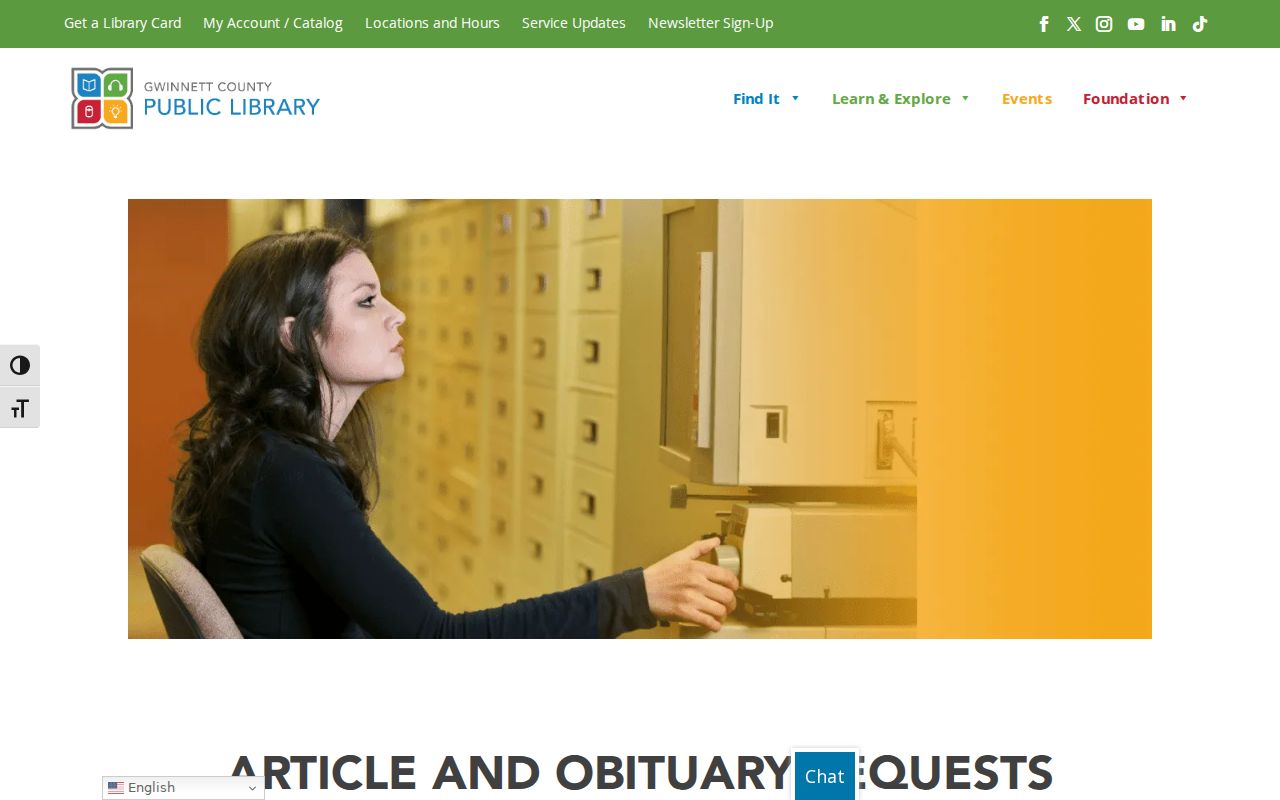
The holdings table shows where titles overlap and where a missing issue may require another paper. GCPL readers can improve an image, print it, email it, or save it to USB. Remote researchers can book a librarian or submit an article or obituary request.
The run begins with the Weekly Gwinnett Herald in June 1871 and reaches the modern Daily Post period through several title changes. That long chain is a strong local story, but it is not complete at every issue. Search spelling variants and browse by date when OCR produces no result.
GCPL Guides for Lawrenceville Names
The Gwinnett County Public Library research guides route readers to genealogy, local history, newspapers, and Georgia resources. Ancestry Library Edition requires branch use with a library barcode and PIN. HeritageQuest is available through GCPL and GALILEO for census indexes, family-history books, and pension files, subject to card and password access.
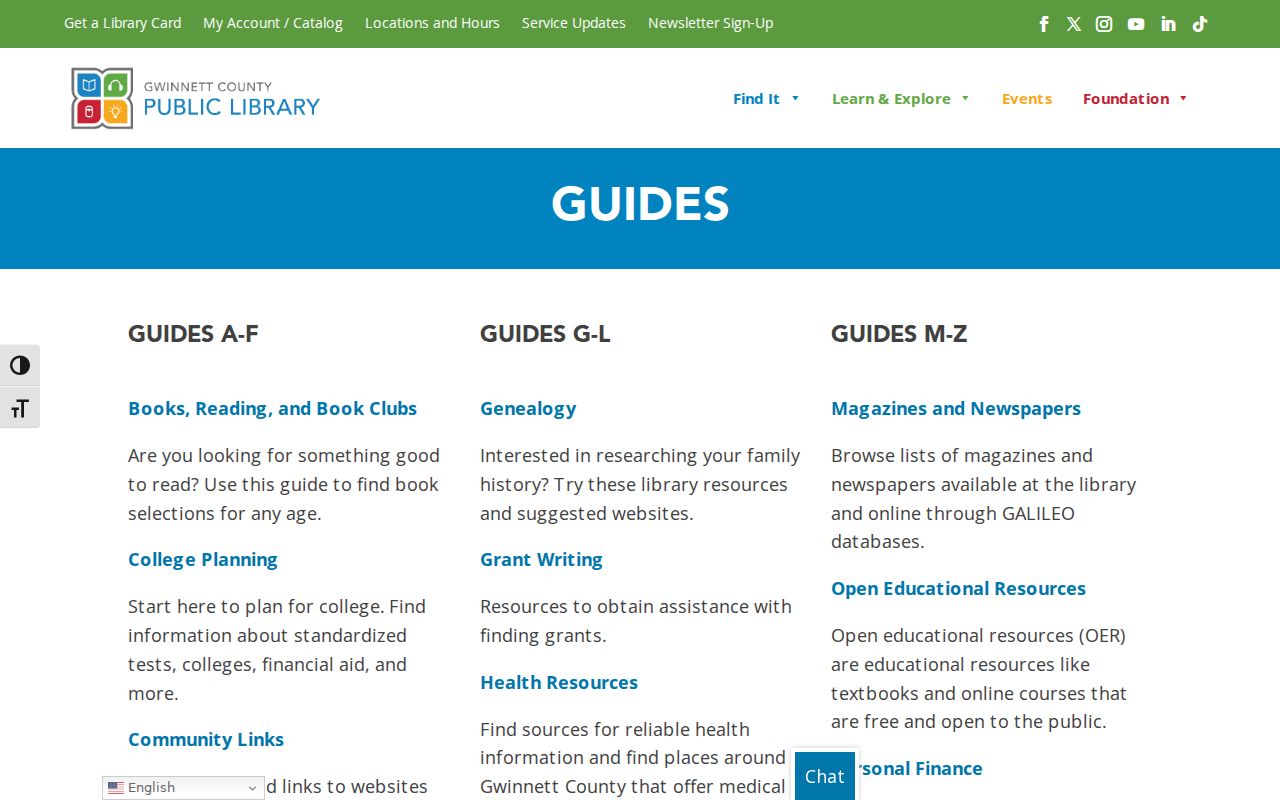
The guide list is the right starting point when a city directory search produces only a broad database result. Library staff can help identify the title and access route, while the researcher remains responsible for confirming that a volume actually covers Lawrenceville.
GCPL administration is at 1001 Lawrenceville Highway and can be reached at 770-978-5154. A branch visit is useful when licensed sources cannot open from home. Bring surnames, date ranges, organizations, and each known address rather than asking for an unrestricted name search.
Lawrenceville Church Directory Years
The Gwinnett Historical Society catalog identifies First United Methodist Church Lawrenceville directories for 1966, 1973, 1978, 1983-84, 1995-96, 1996-97, 1999, and an undated volume. These are voluntary congregation records. They can connect families to a church community during a publication year, but they are not complete city resident rolls.
The Society's genealogy library occupies Room 210 in the Historic Courthouse at 185 West Crogan Street. Posted hours are Monday, Wednesday, and Friday from 10:00 a.m. to 2:00 p.m.; the phone is 770-822-5174. More than 2,000 publications and files cover surnames, families, churches, cemeteries, schools, places, maps, photos, and microfilm. Ask about access and reproduction first.
Its holdings also include court and commission minutes, deeds, tax sheets, aerial survey material, and Lawrenceville school and depot images. Those sources can confirm a city-directory clue through land, family, or place evidence. Note: A church directory records voluntary participation in one publication, not every resident at an address.
Georgia Archives Extends Lawrenceville Research
The Georgia Archives catalog and research room extend a Lawrenceville city directory search into county books, maps, photographs, marriage microfilm, military files, and state records. Its Virtual Vault is free and needs no public login. The County Records Microfilm Index works as a card catalog: choose Gwinnett and inspect the cards to learn which deed, probate, marriage, court, and tax volumes were filmed.
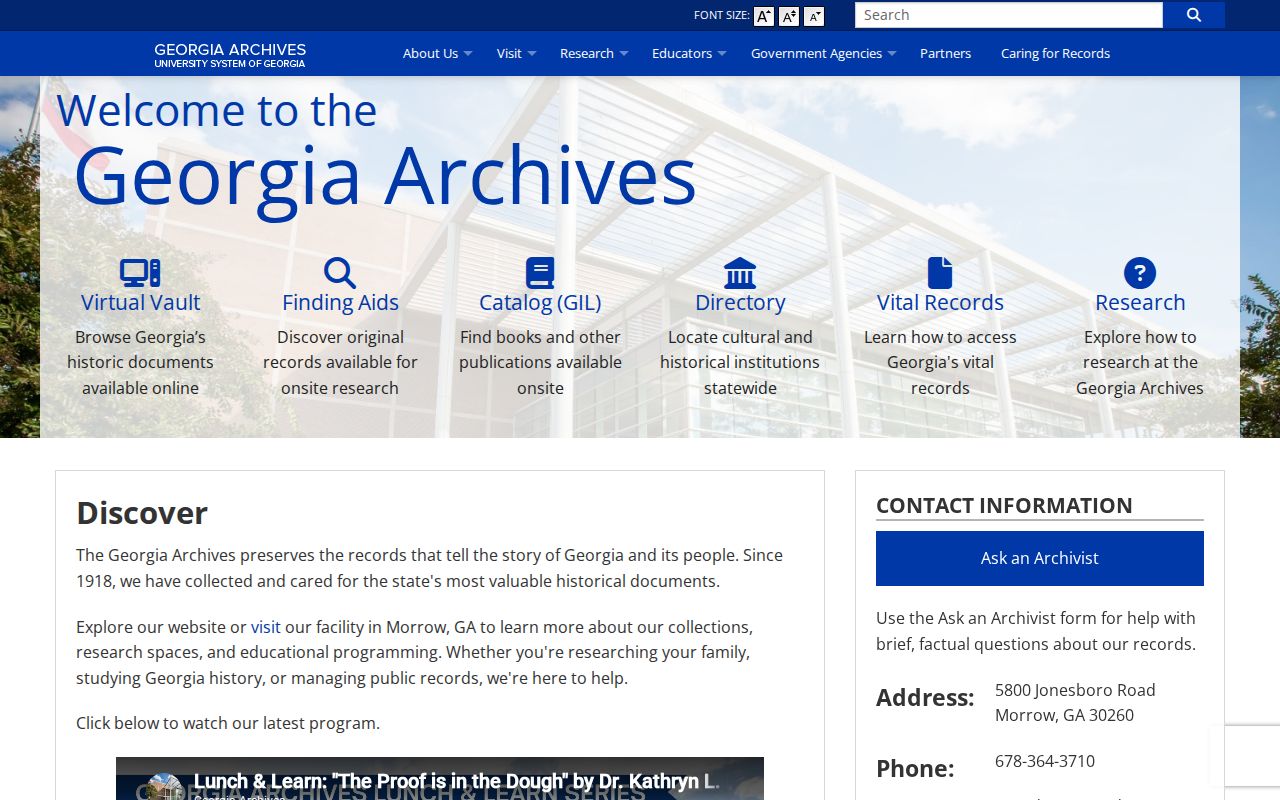
The Archives screen points researchers beyond web indexes when an old Lawrenceville name has no digital match. Pre-1900 county court records were often filmed, while later originals generally remain at the courthouse.
FamilySearch also catalogs six reels of indexed Gwinnett Superior Court minutes for 1871-1902. Image access can depend on an account or affiliate center. Use the exact court, date, and reel citation so another researcher can reproduce the find.
Lawrenceville's New Memory Collection
The Hooper-Renwick Library history records the June 2025 opening of a library inside the former county Black high school. The building includes school-history exhibits, memorabilia, a Black Studies room, and an enhanced permanent collection. It adds a focused route for alumni, school, and family research that older city directories may not capture.
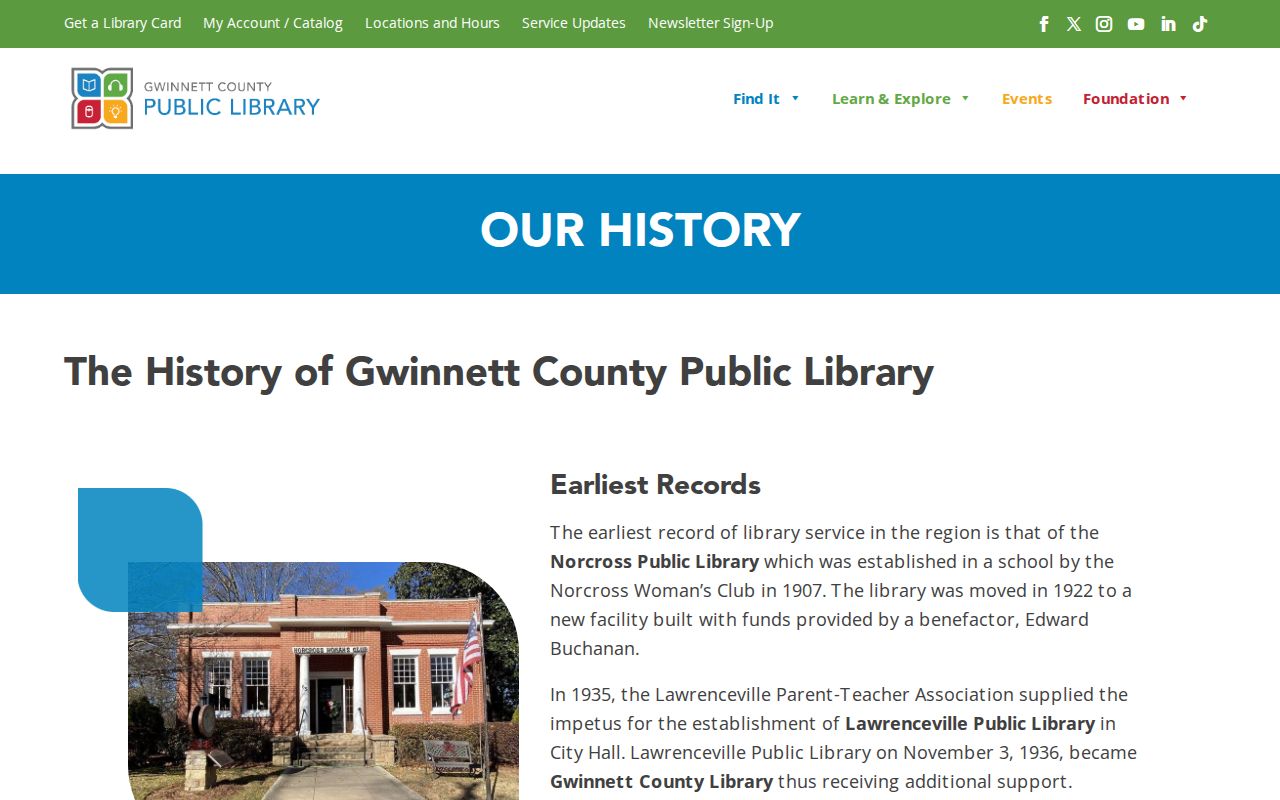
The library history page gives needed context for the collection and building. Confirm current access, catalog status, and event schedules before relying on a visit, since a community-memory collection may grow after opening.
Trace Lawrenceville Families Across Years
A careful Lawrenceville city directory trail starts with the precise title, year, and page. It then moves into sources that answer different questions. Census records describe households at ten-year intervals; newspapers supply dated events; deeds show legal owners; probate can identify heirs; church directories document voluntary community ties.
- Find the earliest verified entry and copy its exact spelling, initials, category, title, year, and page.
- Search the prior and next source, allowing for compound surnames, maiden names, and changed initials.
- Pair the date with a public census year. GCPL has Gwinnett reels for 1820-1920, with 1890 missing.
- Check newspapers around a move, death, marriage, business opening, or legal notice.
- Confirm the person through an independent deed, probate, cemetery, church, or court record.
A missing name proves little. The person may have moved, died, married under another name, declined publication, fallen outside the collection's scope, or been missed by OCR. For modern address-keyed ownership, use the Lawrenceville street directory rather than treating an old list as current.