Lawrenceville Past-Resident Sources
No single roll spans the full life of a house. Start with the newest parcel evidence, move through conveyances, then add household and event sources. Exact Lawrenceville reverse-directory and Sanborn-map year runs were not verified, so they cannot be treated as guaranteed local holdings.
| Source | Years covered | Where held | What it shows |
|---|---|---|---|
| Tax digest and GIS | Current, plus available sale data | Gwinnett assessor and GIS | Owner, situs, mailing address, parcel, map context |
| Recorded deeds | Surviving land books from September 26, 1871 to present | Clerk, GSCCCA, older books | Legal owners and transfer dates |
| Federal census | Gwinnett 1820-1950 public; 1890 lost | GCPL, NARA, FamilySearch | Household members and place context |
| Local newspapers | Named runs from 1871 onward | GCPL microfilm and DLG | Sales, obituaries, notices, address clues |
| Permits and code files | Modern electronic period; older by request | City or county by boundary | Work dates, applicant, contractor, property change |
| Probate and obituaries | Varies by record group | Probate Court, library newspapers | Death, estate, heir, and family evidence |
The Lawrenceville city-directory collections describe the verified historical shelf in detail; this backward address trail uses those sources only when a volume actually covers the right year.
Start with Lawrenceville's Parcel
Search the Gwinnett property system by situs address, the physical address assigned to the parcel. Capture the parcel ID, subdivision, lot and block, legal description, current owner, separate mailing address, and newest deed reference. Then open the parcel in the GIS Data Browser to check its shape and jurisdiction.
A parcel card proves tax ownership, not every person who lived there. The legal description is the durable bridge when street wording or numbers differ between decades.
- Parcel ID
- The county key for one tax parcel.
- Legal description
- The lot, block, subdivision, or metes-and-bounds description recorded with land.
- Chain of title
- The linked sequence of deeds transferring the same property.
- Grantor
- The party conveying an interest.
- Grantee
- The party receiving that interest.
Walk Gwinnett Deeds Backward
The GSCCCA Real Estate Index is the official remote route for Gwinnett instruments. Remote index and image access may cost money, while searching and viewing in the Clerk's land-record room at 75 Langley Drive is free. Ordinary and certified copies have different fees. When an online hit has no image, retain the county, parties, document type, recording date, and book/page or instrument number for a precise counter request.
- Open the present owner's purchase deed and record grantor, grantee, dates, reference, and legal description.
- Treat that seller as the next backward subject and find the deed by which the seller acquired the parcel.
- Confirm every link by legal description, not street address alone.
- Repeat until electronic results stop, then use grantor-grantee books at the clerk or archives.
- Add household evidence only after the ownership chain is stable.
The GSCCCA eCertification service can return a secured certified PDF when formal proof is needed.
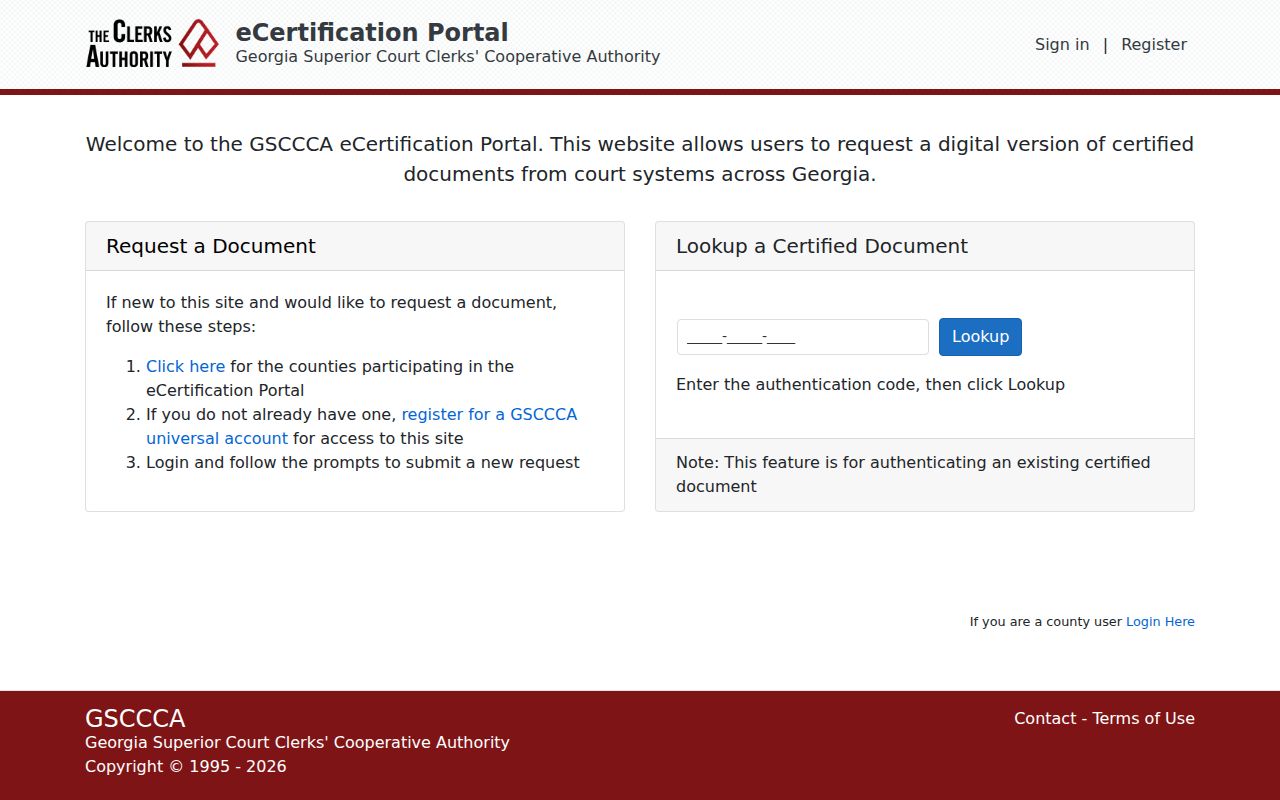
The service supplies a certified document, while the deed's names and legal description carry the past-resident search backward.
Lawrenceville's 1871 Record Break
The first Gwinnett courthouse burned in 1871. The Clerk states that surviving deed and land records begin September 26 of that year. That is a real limit, not proof that a property had no earlier owner. Before the surviving chain, search private deeds, tax material, court minutes, newspapers, family papers, church files, and the Gwinnett Historical Society archive.
The society's Room 210 collection at the Historic Courthouse includes deeds from 1851 and 1852, a group of deeds from 1870-1940, maps, photos, family files, and court or commission minutes. Hours are Monday, Wednesday, and Friday from 10:00 to 2:00. Call 770-822-5174 before a focused visit.
Lawful house history. Use previous-resident records for respectful personal research; never contact, watch, threaten, or harass a person found in them.
Fill Lawrenceville Years with Newspapers
Gwinnett County Public Library offers an unusually long chain of local microfilm: Weekly Gwinnett Herald from 1871, News Herald, Gwinnett Journal, Gwinnett Daily News, Gwinnett Post-Tribune, and the Daily Post era. These runs can place a sale, obituary, legal advertisement, school item, or social notice between deed dates.
The GCPL microfilm service can improve, print, save, or email images. It also accepts obituary and article requests and offers Book-a-Librarian help. Search names, street variants, subdivision names, and deed parties within a narrow date window. A newspaper mention supports an event; it should not stand alone as title proof.
Pair Lawrenceville Census Households
Public federal schedules now extend through 1950. GCPL has Gwinnett census microfilm from 1820 through 1920, with 1890 missing. A census can identify household members and a geographic sequence, though early schedules may lack modern street numbers. Compare neighboring households, district labels, roads, and known relatives.
- Choose the census nearest a verified deed or newspaper date.
- Search the owner's name with spelling, initials, and surname variants.
- Read the whole household and nearby entries without assuming each relationship.
- Bridge to the next census with newspapers, church directories, probate, or permits.
- Mark 1890 as a source gap instead of guessing continuity.
A missing name can reflect a move, death, marriage-name change, enumeration error, or bad indexing. It does not by itself identify a new previous resident.
Lawrenceville Permits Follow Boundaries
Check the city line before seeking building history. Inside Lawrenceville, Licensing, Permits and Plans, EnerGov, and city Code Enforcement hold relevant files. Outside the incorporated line, Gwinnett Planning and Development is the custodian even when the address uses Lawrenceville as its postal city. A permit may date an addition and name an applicant or contractor, but it does not prove that either person lived there.
If an archived file is not online, request a defined existing record by address, date range, and record type. The Georgia Open Records Act generally requires a response within three business days, even when production takes longer. It does not require an agency to create a house history.
End Past-Owner Trails Carefully
A former owner's trail often ends in probate or obituary evidence. Public estate petitions and returns may identify heirs and addresses as of the filing date. Newspaper obituaries can connect relatives, churches, cemeteries, and prior places. Verify death facts through an official certificate, probate record, cemetery record, or more than one strong source.
Georgia birth and death certificates are confidential except for authorized disclosures under O.C.G.A. § 31-10-25. Eligible requesters can use the Georgia Vital Records office, but a certified certificate is not an open resident roll.
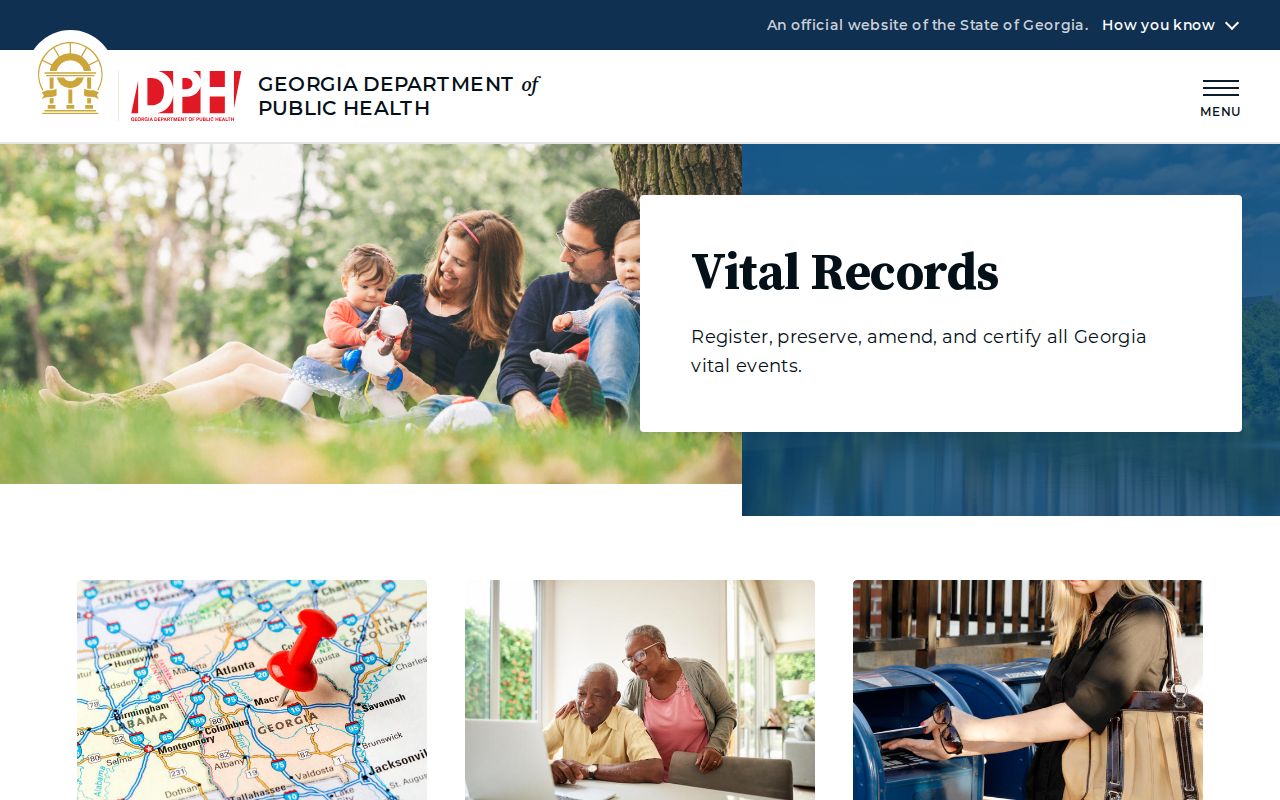
The state source confirms the official channel and reminds researchers that eligibility applies even when a name first appears in an open deed.
Gaps in Lawrenceville House History
No authoritative catalog proved a complete Lawrenceville reverse or criss-cross directory run, and exact local Sanborn years remain unverified. Do not invent them. Ask GCPL, the Gwinnett Historical Society, DLG, or Georgia Archives by address, subdivision, and date range. Also distinguish title from occupancy at every step.
Federal court material is relevant only when a known case supplies a property or party link. The official PACER service is the access point.
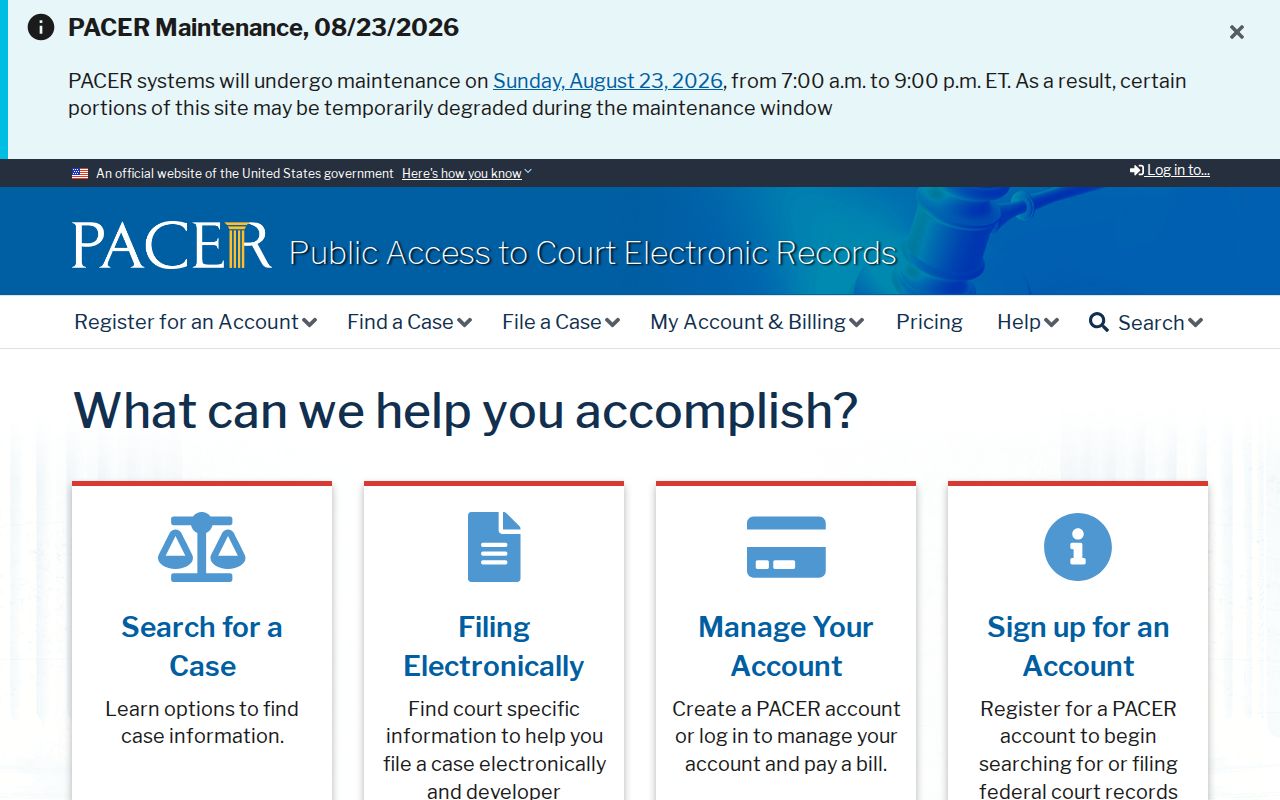
A broad federal search is not a substitute for the Gwinnett deed chain; use it only to inspect a specific, relevant docket.